
Dothan, AL · Garage Door Service
Opener Installation for Headland's 1980s Garage Doors
Headland's homes mostly date to 1980, which means chain-drive openers nearing the end of their run. We install modern openers on a 9-mile trip from Dothan.
- Repairs & new doors
- Springs & openers
- Serving 8 nearby communities
Parts We Carry
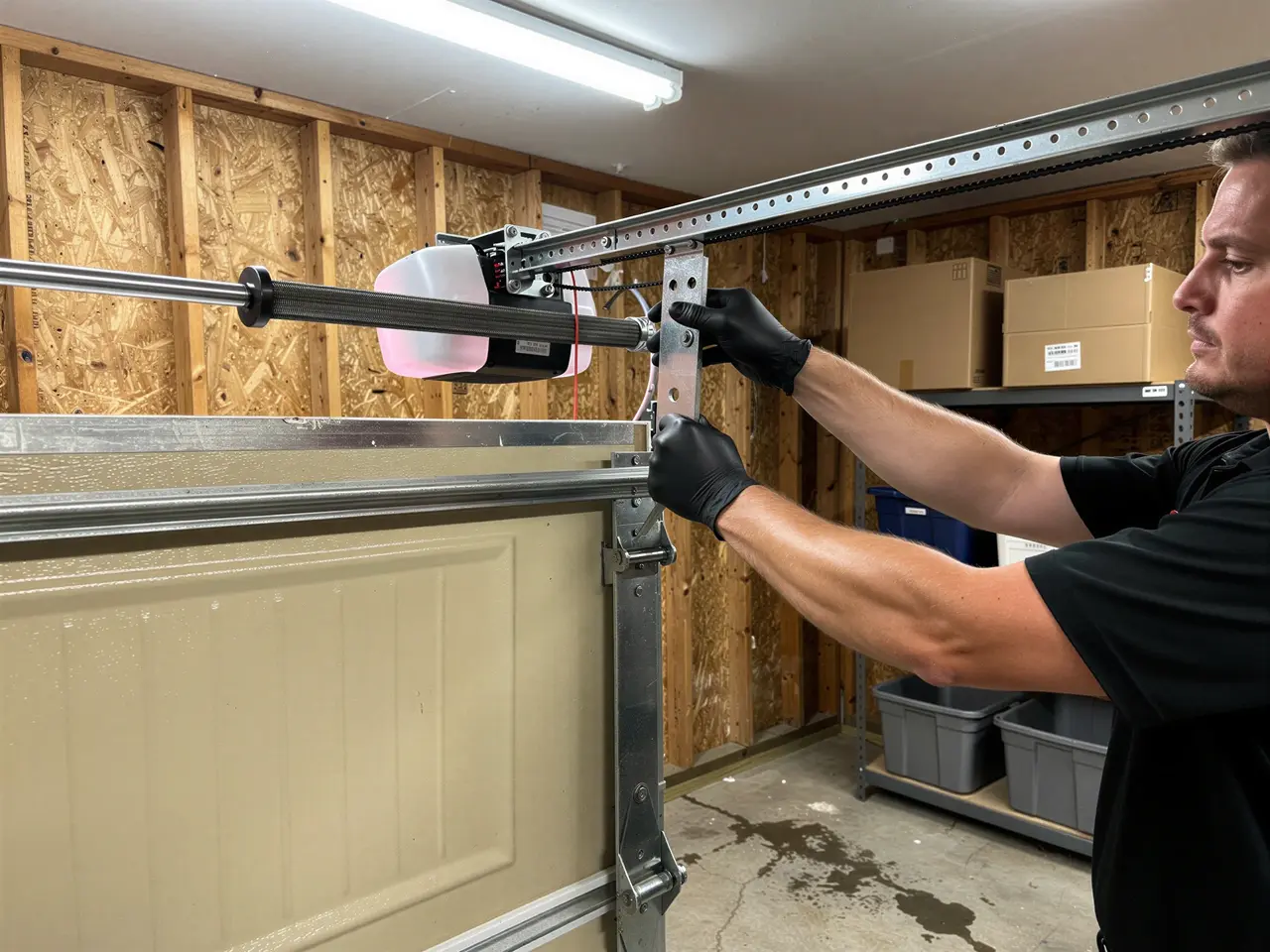
Headland's housing stock centers on 1980, which puts most garage doors here on steel sectional panels hung on openers that were new when chain-drive was still the standard choice. That means the opener coming out is usually a 1/3 or 1/2 horsepower chain unit, often with a steel rail that's bowed slightly from age, and a logic board with none of the rolling-code security or battery backup that's standard now. We carry belt-drive and chain-drive replacements in the horsepower ranges that match these doors, along with the rail hardware, remotes, and keypad units that pair with them. We don't stock every wall console on the market, so if you want a specific smart-home integration beyond the common Wi-Fi models, we'll need to order it, which can add a day or two to the job.
How Long It Takes
A straight swap on one of these 1980-era doors, where the track and spring system are sound, usually runs under two hours once the truck is on site. Headland sits about 9 miles from our Dothan base, so travel time is short and doesn't eat into the afternoon the way some of the farther-out stops do. Where it slows down is when the existing bracket or header mount was built for an opener twice the size of what's available today, or when the door itself is original 1980s steel and needs reinforcement before a new opener can be trusted to lift it safely. We'll tell you on arrival if that's the case rather than bolting a new unit to a header that won't hold it.
The DIY Question
Swapping a garage door opener looks like a weekend project, and for some homeowners it is. The part that trips people up on houses from this era isn't the opener itself, it's the leftover wiring and mounting hardware from whatever was there before 1980s code even addressed photo-eye sensors. If your current setup predates safety sensors entirely, a straight bolt-in of a new opener without adding those sensors is a code problem and a real hazard, not just a technicality. If you're comfortable running new low-voltage wire and squaring a bracket, the mechanical side isn't hard. If you're not sure what's behind the existing wall button, that's the part worth having a second set of eyes on before you power anything up.
How We Fix It
We start by checking the door itself, not just the opener, since a steel sectional panel from 1980 carries different weight than the lighter doors sold today, and the opener has to be sized to match. We pull the old unit, check the header for rot or cracking that's common on garages this age, and mount the new rail and motor to solid wood or add blocking where it isn't. Then we run fresh wiring for the wall control and safety sensors, set the travel limits and force settings for the actual weight of your door, and test the auto-reverse function before we call it done. Headland's households skew to a median income well above the wider Dothan service area, and we see that reflected in which openers people choose here, with more requests for belt-drive units and battery backup than we get elsewhere.
The Complications
The most common surprise on a Headland job is a header or jamb that was framed for a lighter door than what's currently hanging, or for a smaller opener than the homeowner wants installed now. Houses built around 1980 weren't built with today's heavier insulated doors in mind, so we sometimes need to add backing before the new opener bracket goes in. The region's heat band is moderate rather than extreme, which is kinder to opener gearing and circuit boards than hotter climates, but a garage that bakes all afternoon still shortens the life of plastic drive gears faster than a shaded one. We won't install a new opener on a door with a visibly cracked panel or rusted track and call the job finished. That's a door problem first, and fixing the opener on top of it just moves the failure point.
What You Are Seeing
If your opener is making a grinding or clicking sound but the door still moves, that's often the drive gear failing inside the housing, a known wear point on 1980s-era chain units that have been running two or three decades longer than they were built for. If the door reverses halfway up or won't close at all, check the sensors first, but on older installs without factory sensors, the fix is adding them, not resetting anything. A remote that works intermittently from across the driveway but not from the street is usually a dying logic board rather than a battery issue. None of these point to the same repair, which is why we look at the actual door and opener before quoting anything over the phone.
Frequently asked questions
Do you install garage door openers in Headland or just Dothan?
We cover Headland from our Dothan location, about 9 miles out. There's no separate branch here, so scheduling runs through the same Dothan team, but the trip doesn't add meaningfully to the job time.
My house was built around 1980. Will a new opener fit without changing the door?
Usually yes, as long as the header and bracket are sound. Doors from that era are often heavier steel than today's standard, so we size the new opener's horsepower to the actual door weight rather than installing whatever's cheapest.
Can I keep my old remote with a new opener?
Not if the old opener predates rolling-code technology, which most units from the 1980s do. New openers use a different signal protocol, so you'll need new remotes or a keypad paired to the new unit.
Is a belt-drive opener worth it over chain-drive?
Belt-drive runs quieter, which matters more if the garage sits under or next to a bedroom. It costs more upfront. We install both and will tell you honestly if the price difference is worth it for your setup.
Book garage door service in Dothan
Call now or request a quote - tell us what the door is doing and where you are.